Fitlify
Your body is the controller.
A webcam fitness game for PC, in the works at Alfie Software.
Your camera's pictures never leave your PC.
Swing for it.
Empty hands, a full swing. The game puts the bat in them.
Play the rally.
Step in and swing through. No racket to buy, none to break.
Roll a strike.
One step, one swing of the arm, and let it go.
And in the game.
The figures above are drawn for this page. These two pictures are the game itself, as it stands today, in development.
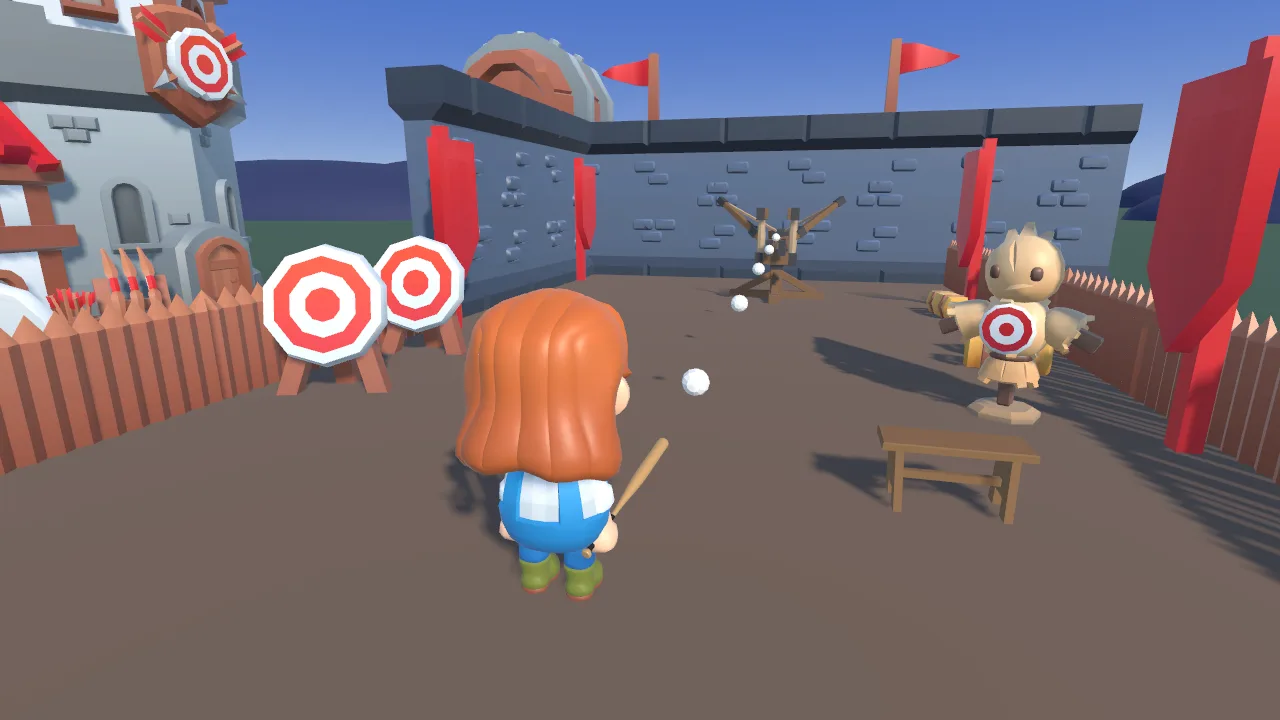
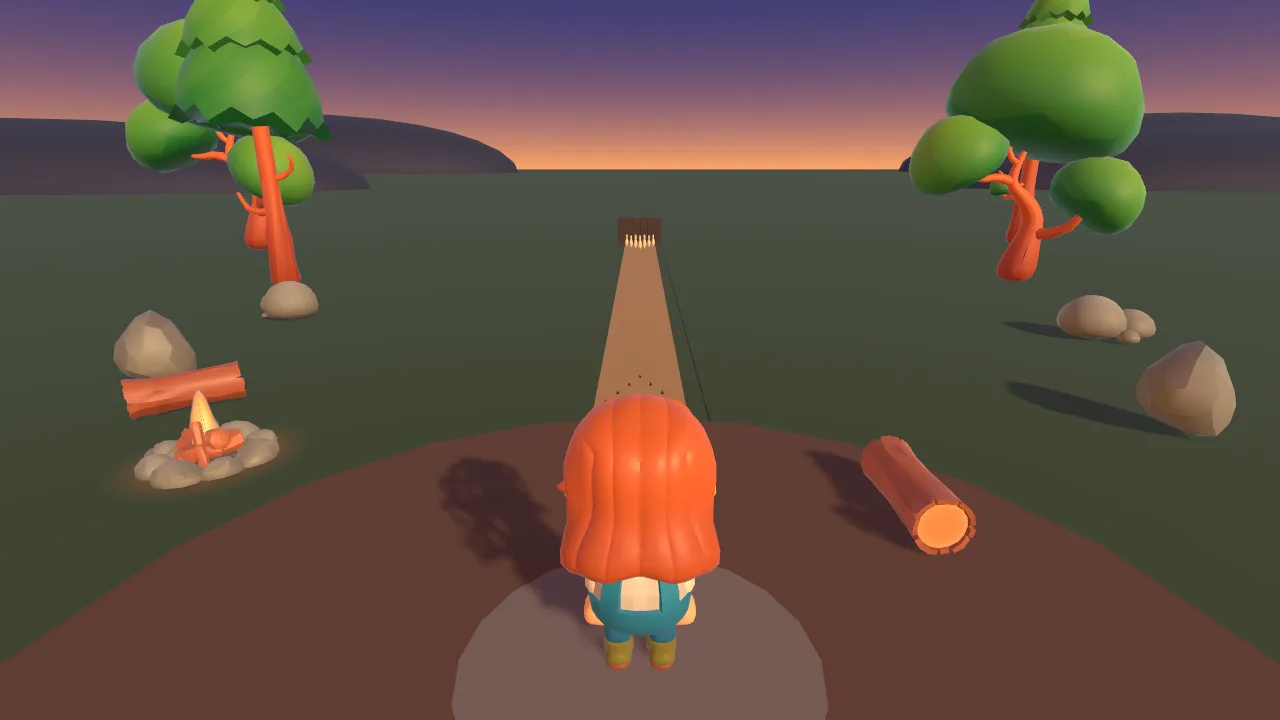
33 points, read on your PC.
Fitlify finds 33 points of your body in your webcam's picture, from your nose to your toes, and plays the game from those alone.
The pictures are read in memory. They are never saved and never sent.
The picture stops here.
Your webcam's picture goes into the game and no further. The game reads 33 points from it, keeps those, and lets the picture go.
- One picture from the camera
- 921,600 bytes: 640 by 480, three bytes a pixel, uncompressed
- One pose
- 580 bytes
About 1,600 poses fit in one picture. To scale, the pose's bar would be thinner than a pixel, so it is drawn at one.
-
Never saved, never sent.
The camera is on only while a game needs it. Its pictures are read in memory, never saved and never sent.
-
Nobody is watching.
Nothing goes to Unity, to Alfie Software or to anyone else. No analytics, no ads, no tracking, and the game never uses your microphone.
-
A friend gets your character, not you.
Play a friend on your home network and their PC gets your character's moves, locked. Never a picture, and never your points.
Head to head is in the works
One honest note: how someone moves can still tell who they are, as a walk can. So Fitlify treats your moves as personal data, and they go only to a friend's PC you paired with by a code.
Try a taste.
Stand back from your camera, put your hands up and punch: a figure of your own 33 points hits the bag. It is a taste, a small pose model running in this tab, and not the game's own tracker.
The camera demo is shown live, on request.
Before the page asks for your camera it cuts its own line to the network. Your picture is read in this tab and never shown, saved or sent. The camera goes off when you press Stop, scroll away or switch tabs.
What it promises.
-
It plays offline.
No connection needed. Take the Wi-Fi away and the game keeps going.
Built
-
It never weighs you.
No scale, no measurements, no score for your body. It never asks, so it has none to keep.
Built
-
A gentler version counts the same.
Every movement gets an easier form, picked per player, worth exactly as much.
Built for sparring, bowling, free throws and cornhole, seated; the rest is in the works
-
Your character is built by the work.
It grows from what you did at the camera, never from winning.
Built
Six classes to earn.
What you practise decides who your character becomes.
-
Brawler
Bare handsStrength
-
Slugger
BatStrength
-
Ace
RacketAgility
-
Sage
HoldsBalance
-
Scout
AgilityEndurance
-
Champion
StrengthEnduranceAgilityBalance
Gold is earned by moving and dresses your character. It is never sold.
In the works: the purse is built, the shop is not. The rate shown is an illustration.
How it is built.
For the engineers: one frame's path from the camera to the character, in Unity 6 and C#.
-
The camera
A webcam frame is read in memory on your PC. No picture is written to disk.
-
The pose models
Models running inside the game find 33 points of the body in that frame.
-
The datagram
Each pose is packed into 580 bytes: a 52-byte header, then 33 points of 16 bytes. A recording is a file of these, so a play session can be replayed byte for byte.
This is what stays light. The pose models before this step still read every picture, and they are where the frame budget goes; the rules, a recording and every test after it work on these 580 bytes and never on a picture.
-
The core
Every rule, the counting included, lives in a library that knows nothing of the engine. Its tests run twice: inside Unity, and on plain .NET with no engine at all.
-
The character
The engine side stays thin: it reads what the core decided and moves a character.
The hard problems
-
A frame budget for modest PCs
The target is 30 frames a second at 720p on Iris Xe or Vega class graphics, on four cores that also run the tracking. The look scales down before the frame rate does.
-
Recordings as regression tests
Recorded sessions of real movement are replayed through the counter by the tests, so a fix for one swing cannot quietly break another.
-
Attacked on purpose
Before a milestone, a red team pass hunts for a way in, a way out and a way to cheat, and a blue team pass answers each finding.